
Longer days are here, the sun is out, and your dog is giving you that look. It’s tempting to match their energy and go full summer mode immediately: longer hikes, more park time, beach days every weekend. But your pet’s body needs a little time to catch up with the calendar. Here’s how to ease into the warmer months in a way that keeps your pet feeling great all season long.
Their Body Hasn’t Switched Seasons Yet
Just like people, pets acclimatize to heat gradually. A dog who spent winter on shorter, cooler walks has a cardiovascular and thermoregulatory system that’s been running in low gear. Their coat may still be in a winter phase. Their paw pads, softer from months on gentle surfaces, aren’t yet toughened for hot pavement or rough terrain.
The first warm weeks of spring are when the gap between what your pet wants to do and what their body is ready for is widest. That gap is where most overdoing-it injuries happen.
The good news: closing that gap doesn’t take long. A few intentional weeks of gradual build-up makes a real difference.
Build Up Activity Gradually
Start shorter than you think you need to. If your dog’s winter routine was a 20-minute walk, don’t jump to an hour-long hike the first warm weekend. Add 5–10 minutes of activity per week, watch how they recover, and let that guide the pace.
Watch for the subtle signs of too much. Dogs will often push past their limit to keep up with you — it’s in their nature. Slowing down, excessive panting for the distance covered, stiffness the next morning, or reluctance to get up after a rest are all signs the session was more than they were ready for.
Cats need a warm-up period too. Cats who go outdoors or have access to a catio will naturally increase their activity as temperatures rise. Watch for any signs of overheating if your cat is in a sun-exposed area for extended periods. This is especially important to watch for flat-faced breeds like Persians or Exotic Shorthairs.
Don’t forget the day after. A dog who seems fine on the day of a long outing may show soreness or fatigue the next morning. Factor recovery into your planning. Back-to-back long days in the early season can be a recipe for muscle strain.
Time It Right
This is one of the simplest and most effective adjustments you can make, and it costs nothing.
In warmer months, the safest windows for outdoor activity are before 9am and after 6pm. Midday and early afternoon are when ground temperatures, especially pavement, peak. Air temperature doesn’t tell the full story: asphalt absorbs and radiates heat, and can be 40–60°F hotter than the ambient air temperature.
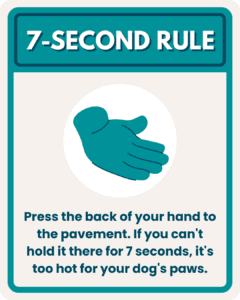
The 7-second rule is worth knowing: press the back of your hand to the pavement. If you can’t hold it there for 7 seconds, it’s too hot for your dog’s paws.
Morning outings also tend to have lower pollen counts, a bonus for pets with seasonal allergies.
Hydration Is Not Optional
Pets don’t sweat the way we do. Dogs regulate heat primarily through panting, which loses moisture rapidly. On a warm walk, your dog can become dehydrated faster than you’d expect.
Practical hydration habits:
- Bring water on every outdoor outing, including short neighborhood walks
- Offer water before you leave, not just when your pet seems thirsty. Thirst is a late signal of dehydration
- Carry a collapsible travel bowl; most dogs won’t drink well from cupped hands
- Watch for signs of dehydration: dry or sticky gums, lethargy, sunken eyes, skin that’s slow to spring back when gently pinched
Cats are notoriously poor drinkers. If your cat spends time outdoors in warm weather, ensure fresh water is always available and consider a pet water fountain as moving water encourages cats to drink more.
Paws, Coat, and Skin
Paw pads need conditioning time. Just like bare human feet need time to toughen up for summer walking, paw pads soft from a winter of indoor surfaces need a few weeks to condition for hot pavement and rough trails. Stick to grassy or shaded routes early in the season, and gradually introduce harder surfaces.
Cracked, reddened, or tender paw pads are a sign you’ve moved too fast. Paw balm can help protect and heal, and booties are a legitimate option for dogs doing significant pavement time in peak heat.
Don’t rush the seasonal shed. Many dogs shed their winter coat on their own timeline, and that’s fine. Brushing helps move the process along and keeps the coat from matting or trapping heat but avoid shaving double-coated breeds (Huskies, Golden Retrievers, Labs, Border Collies). Their double coat actually insulates against heat as well as cold, and removing it disrupts that function and exposes skin to sunburn.
Yes, pets can get sunburned. Light-colored, thin-coated, and pink-skinned pets are susceptible to sun damage. Pet-safe sunscreen exists and is worth using for pets with significant sun exposure, especially on water or at the beach.
A Note on Breeds That Need Extra Care
Some pets need a more conservative warm-weather approach regardless of fitness level.
Flat-faced (brachycephalic) breeds (Bulldogs, French Bulldogs, Pugs, Boston Terriers, Persian cats, Exotic Shorthairs) have compromised airways that make panting less efficient. They overheat faster and have less margin for error. For these pets, warm-weather activity should always lean toward the shorter and cooler end.
Senior pets have reduced cardiovascular reserve and thermoregulatory capacity. They may want to keep up with the same pace they managed last year but their body may not be able to. Watch closely and err on the side of shorter, more frequent outings rather than long ones.
Overweight pets carry extra heat-insulating mass and work harder for the same output. Warm weather is actually a good motivator to discuss weight management with your vet but the early warm season is not the time to suddenly increase exercise dramatically. Slow and steady matters more here than for any other group.
When to Come See Us
Warm-weather prep is largely about common sense and gradual adjustment but some things do warrant a vet visit:
- Persistent lameness or stiffness after exercise that doesn’t resolve with a day of rest
- Paw pads that are cracked, bleeding, or show signs of infection
- Any signs of heat exhaustion: excessive panting for the level of activity, bright red gums, stumbling, or collapse
- A change in your pet’s willingness to exercise. A sudden reluctance can signal pain or an underlying issue
- Questions about weight, fitness level, or whether your specific pet is ready for the activities you have planned
We’d rather help you plan the season right than see you after something goes wrong.
Book a spring wellness visit by giving us a call!
