Most pet owners know the sun is a heat hazard. Fewer think about it as a UV hazard but pets, like people, can sunburn, develop chronic sun damage, and in some cases, skin cancer. It’s not common in every pet, but for the ones at risk, it’s very real and very preventable.
Here’s what you need to know.
Which Pets Are Most Vulnerable
Sun exposure is not an equal-opportunity hazard. Some pets can spend all day in the California sun with minimal consequence. Others burn in under an hour.
Light-colored or thin-coated dogs and cats are the highest-risk group. White, cream, or light-coated animals, especially those with pink or unpigmented skin underneath, have little natural UV protection. Breeds like Dalmatians, Boxers, Whippets, White Bull Terriers, and light-colored cats are disproportionately affected.
Hairless breeds like Chinese Crested dogs, Sphynx cats, Xoloitzcuintli have essentially no coat protection at all. Sun exposure should be actively managed for these animals year-round, not just in summer.
Ears, nose, and belly are the most commonly affected areas regardless of breed, because the skin is thinnest and fur is sparsest there. Pink ear tips in particular are a classic site for chronic sun damage and, over time, squamous cell carcinoma (one of the more common sun-related cancers in cats).
Dogs who sunbathe by choice can accumulate significant UV exposure if they spend hours stretched out in a sunny window or yard. Just because they’re not running around doesn’t mean the sun isn’t doing damage.
What Sunburn and Sun Damage Looks Like
Acute sunburn in pets looks similar to humans: reddened, warm, sometimes peeling skin. Your dog or cat may show sensitivity when the area is touched. It’s most visible on the ear tips, nose, belly, and groin.
Chronic sun damage over months and years looks like persistent redness, scaling, thickening skin, or sores that don’t heal cleanly, especially on the ears and nose. These changes are worth having evaluated, particularly in cats. Early intervention makes a meaningful difference in outcome.
What You Can Do
Pet-safe sunscreen is real and worth using for at-risk animals. Human sunscreens are not appropriate as many contain zinc oxide or PABA, which are toxic to pets. Look for sunscreens specifically formulated for pets, or ask us what we recommend for your specific animal.
Limit peak sun hours. The same midday window that’s hard on pets from a heat standpoint (10am–4pm) is also the highest UV window. Timing walks and outdoor time for morning or evening protects against both.
Provide shade. If your pet spends time in a yard or on a patio, make sure there’s a shaded area they can access and choose. Some dogs will sunbathe enthusiastically right up until they’re in distress. In these cases especially, shade has to be available, not just theoretically possible to find.
For indoor pets: Window glass does not block UVA rays. A cat who spends hours stretched across a sunny window ledge is accumulating UV exposure. UV-filtering window film is an inexpensive fix for high-sun rooms.
If you notice any skin changes like persistent redness, sores, thickening, or anything that doesn’t resolve, bring your pet in. Sun-related skin changes are among the more treatable things we see, especially when caught early.
Come Find Us at Cardiff Dog Days of Summer: August 2nd
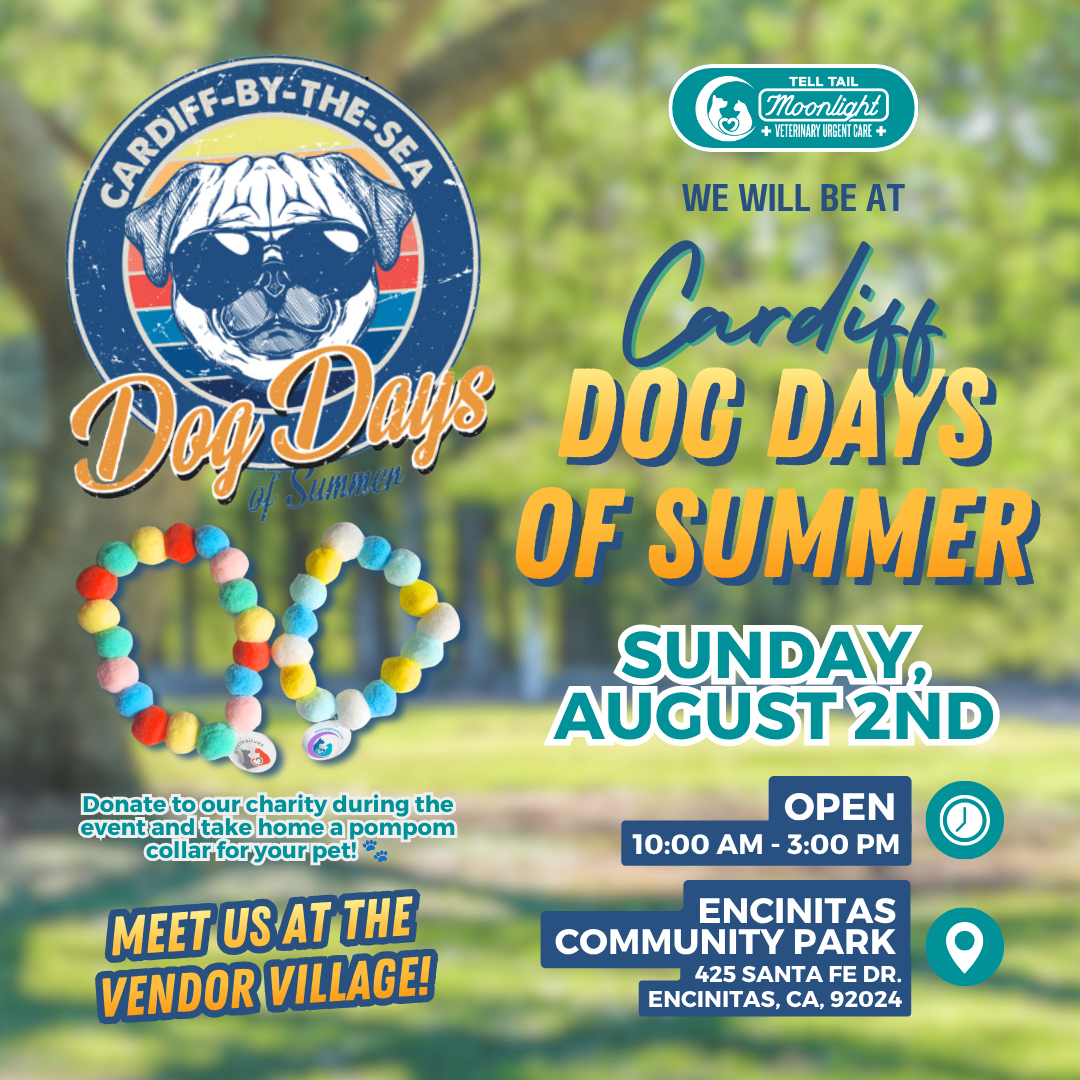
Speaking of sun safety: we’ll be putting it into practice in person at the 21st Annual Cardiff Dog Days of Summer, presented by Kahoots, on Sunday, August 2nd from 10am to 3pm at Encinitas Community Park in Cardiff-by-the-Sea.
This is one of North County San Diego’s biggest and most beloved pet events, and we’re proud to be there as an official sponsor.
Come visit the Moonlight Vet Center booth and:
🐾 Cool off at our cool-pool station complimentary tennis balls included, because a wet dog with a tennis ball is a happy dog
🌸 Get a pompom collar when you donate to our MyBalto charity – a small way to do something good while celebrating your pet
🎉 Play our Plinko board for a chance to win prizes
The event is free and open to the public. Friendly, leashed dogs welcome. For more information about the event itself, visit cardiff101.com or follow @cardiff101mainstreet on Instagram.
We’ll see you there!